
Wine tasting score cards‚ often available as PDF downloads‚ are essential tools for evaluating wines systematically. They provide a structured format for recording observations and impressions‚ enhancing the tasting experience and aiding memory.
These cards‚ whether printable or used digitally‚ help individuals – from beginners to sommeliers – assess various wine characteristics‚ fostering a deeper understanding and appreciation of each vintage.
What are Wine Tasting Score Cards?
Wine tasting score cards‚ frequently found as readily available PDF templates online‚ are standardized forms designed to guide and document the sensory evaluation of wine. They aren’t merely checklists; they are structured tools intended to promote objective assessment‚ moving beyond simple “like” or “dislike” reactions.
These cards typically include sections for recording details like wine name‚ vintage‚ and producer‚ alongside dedicated areas for evaluating appearance‚ aroma‚ taste‚ and finish. Many printable versions‚ like those used in wine tasting games or hens parties‚ offer a scoring system‚ often numerical‚ to quantify impressions.
The core purpose is to provide a consistent framework‚ allowing tasters to systematically analyze each wine and compare notes effectively. Whether a simple scorecard or a detailed judging sheet‚ the PDF format ensures easy access and reproducibility for individual or group tastings.
Why Use a Wine Tasting Score Card?
Utilizing a wine tasting score card‚ often accessed as a convenient PDF‚ dramatically enhances the tasting experience. It moves evaluation beyond subjective preference‚ fostering a more analytical and informed approach. These cards‚ including printable options for parties and games‚ aid memory retention of each wine’s characteristics.
Employing a structured format‚ like those found online‚ encourages consistent evaluation across multiple wines‚ allowing for meaningful comparisons. Whether a basic template or a sommelier-level sheet‚ the PDF provides a standardized method for recording observations on color‚ aroma‚ taste‚ and finish.
Furthermore‚ score cards facilitate learning and development of your palate‚ helping you articulate your impressions and identify preferred styles. They’re invaluable for both casual enthusiasts and those seeking a deeper understanding of wine.
Key Components of a Wine Tasting Score Card
Wine tasting score card PDFs typically include sections for wine identification‚ appearance‚ aroma‚ taste‚ and finish‚ with scoring criteria for detailed analysis.
Wine Identification Section
The Wine Identification Section‚ prominently featured in most wine tasting score card PDFs‚ is the foundational element for organized evaluation. This crucial area requires detailed input to accurately track and recall tasting experiences. Typically‚ it includes dedicated fields for recording the wine’s name – specifying the producer‚ vineyard‚ and any relevant sub-designation.
Furthermore‚ a space is provided to note the vintage year‚ essential for understanding age-related characteristics. Crucially‚ the type of wine (e.g.‚ Cabernet Sauvignon‚ Chardonnay) must be specified. Many scorecards also include a section to record the appellation or region of origin‚ providing context to the wine’s terroir. Finally‚ a field for noting the price can be valuable for assessing value and correlating cost with perceived quality during comparative tastings.
Appearance Evaluation
The Appearance Evaluation section within a wine tasting score card PDF focuses on visual assessment‚ providing initial clues about the wine’s age‚ grape variety‚ and potential quality. This section typically begins with Color Assessment‚ prompting the taster to describe the hue – ranging from pale straw to deep ruby – and its intensity.
Following color‚ Clarity and Viscosity are evaluated. A clear wine generally indicates good winemaking practices‚ while haziness might suggest instability. Viscosity‚ often assessed by observing “legs” or “tears” on the glass‚ can hint at alcohol content and residual sugar. Detailed scorecards provide scales for rating these characteristics‚ ensuring consistent and objective observation. This initial visual analysis sets the stage for a more comprehensive sensory experience.
Color Assessment
Within a wine tasting score card PDF‚ Color Assessment is a crucial first step. It provides initial insights into the wine’s age‚ grape varietal‚ and even potential concentration. White wines are evaluated on a spectrum from pale straw‚ greenish hues‚ to gold or amber‚ indicating age or oak influence.
Red wines range from purple (young) to ruby‚ garnet‚ and eventually tawny (older). The intensity of the color is also noted – is it pale‚ medium‚ or deep? Some scorecards offer specific color charts for comparison. Accurate color description requires good lighting and a clear glass. This observation‚ documented on the PDF‚ forms a foundational element of the overall wine evaluation process‚ influencing subsequent sensory perceptions.
Clarity and Viscosity
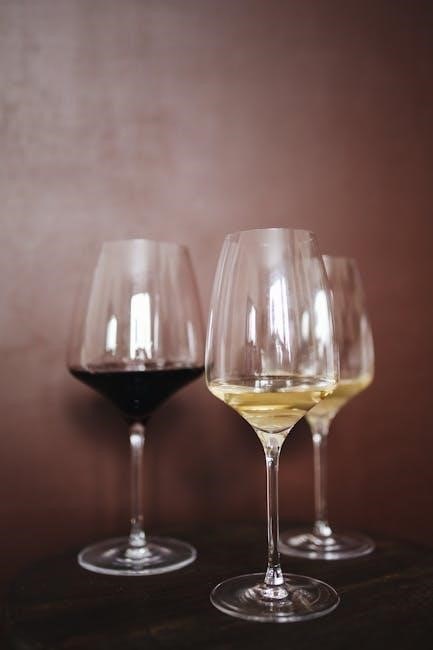
A wine tasting score card PDF dedicates space to assess Clarity and Viscosity‚ vital indicators of wine quality. Clarity refers to the absence of visible particles; a wine should be brilliant‚ clear‚ or have slight haze – significant cloudiness can suggest flaws. Viscosity‚ often described as “legs” or “tears‚” is observed by swirling the wine in the glass.
Thicker‚ slower-moving legs generally indicate higher alcohol content or residual sugar. However‚ legs aren’t a definitive measure of quality. The PDF scorecard prompts noting whether the wine is clear‚ hazy‚ or cloudy‚ and describing the viscosity as low‚ medium‚ or high. These observations‚ though subtle‚ contribute to a comprehensive understanding of the wine’s composition and potential characteristics.
Aroma Evaluation
The Aroma Evaluation section of a wine tasting score card PDF is crucial‚ as smell contributes significantly to perceived flavor. A well-designed PDF will guide tasters through assessing the Intensity of Aromas – ranging from faint to pronounced – and identifying specific Aroma Characteristics.
Common categories include fruit (citrus‚ red fruit‚ black fruit)‚ floral (rose‚ violet‚ honeysuckle)‚ spice (pepper‚ clove‚ vanilla)‚ and earthy/mineral notes. Detailed scorecards often provide checklists or space for free-form descriptions. Recognizing these aromas helps determine the wine’s grape varietal‚ origin‚ and potential age. Accurate aroma identification‚ recorded on the PDF‚ forms a foundation for a complete tasting assessment.
Intensity of Aromas
Within the Aroma Evaluation of a wine tasting score card PDF‚ assessing Intensity of Aromas is a primary step. This isn’t simply what you smell‚ but how much of it reaches your nose. A typical PDF scorecard utilizes a scale – often numerical (1-5) or descriptive (faint‚ moderate‚ pronounced) – to quantify this aspect.
Low intensity suggests a shy or restrained wine‚ potentially needing decanting or further aging. High intensity indicates a bold‚ aromatic wine. Accurate assessment requires concentration and a clean glass. Recording the intensity on the PDF provides a baseline for evaluating aroma complexity and helps determine the wine’s overall aromatic profile‚ influencing the final score.
Aroma Characteristics (Fruit‚ Floral‚ Spice‚ etc.)
A crucial section of any wine tasting score card PDF focuses on identifying Aroma Characteristics. Beyond intensity‚ detailing what aromas are present is key. Scorecards typically offer categories – fruit (citrus‚ red‚ black)‚ floral (rose‚ violet)‚ spice (pepper‚ clove)‚ herbal‚ earthy‚ and oak-derived notes.
Detailed notes within the PDF help build a comprehensive aromatic profile. Descriptors should be specific; instead of “fruit‚” note “black cherry” or “green apple.” Recognizing these characteristics reveals the grape varietal‚ winemaking techniques‚ and potential aging qualities. This detailed analysis‚ recorded on the PDF‚ significantly contributes to a nuanced and informed wine evaluation.
Taste Evaluation
The Taste Evaluation section of a wine tasting score card PDF is where initial impressions translate into detailed analysis. This goes beyond simply liking or disliking a wine; it’s about dissecting its components. Key elements assessed include Dryness/Sweetness‚ gauged on a scale‚ and Acidity Level‚ vital for balance and aging potential.
For red wines‚ Tannin Level is crucial‚ influencing structure and mouthfeel. Flavor Intensity and Complexity are then evaluated‚ mirroring the aroma profile but adding textural sensations. A well-designed PDF scorecard provides space for detailed notes‚ allowing tasters to articulate the interplay of flavors and their overall harmony. This section forms the core of a structured wine assessment.
Dryness/Sweetness
Assessing Dryness/Sweetness on a wine tasting score card PDF is fundamental. This isn’t about the wine’s overall appeal‚ but quantifying residual sugar levels. Scorecards typically employ a scale – from bone-dry to intensely sweet – allowing for objective measurement. Dry wines have minimal sugar‚ while sweeter varieties retain noticeable sweetness.
Understanding this element impacts perceived balance and food pairing potential. A PDF template often includes descriptive terms alongside numerical scores‚ aiding beginners. Experienced tasters can discern subtle sweetness levels‚ even in wines labeled “dry.” Accurate assessment here is crucial for a comprehensive evaluation‚ influencing subsequent taste perceptions and overall scoring.
Acidity Level
Evaluating Acidity Level using a wine tasting score card PDF is vital for determining a wine’s structure and aging potential. Acidity contributes to a wine’s freshness‚ vibrancy‚ and balance. Scorecards often utilize a scale ranging from low to high acidity‚ sometimes with descriptive terms like “flabby” or “crisp.”
Higher acidity wines generally pair better with richer foods‚ while lower acidity wines are often enjoyed on their own. A well-structured PDF template will guide tasters to identify acidity through sensations like salivation and a tingling sensation on the tongue. Accurate assessment of acidity is key to understanding a wine’s overall quality and potential for development.
Tannin Level (for Red Wines)
When utilizing a wine tasting score card PDF for red wines‚ assessing Tannin Level is crucial. Tannins‚ found in grape skins‚ seeds‚ and stems‚ create a drying sensation in the mouth‚ similar to strong black tea. Scorecards typically offer a scale – from “soft” or “smooth” to “astringent” or “harsh” – to quantify this characteristic.
Higher tannin levels often indicate a wine’s potential for aging‚ as tannins act as natural preservatives. A well-designed PDF will prompt tasters to note the tannin’s texture (e.g.‚ silky‚ grainy) and its impact on the wine’s overall structure. Understanding tannin levels helps predict a wine’s longevity and food-pairing capabilities.
Flavor Intensity and Complexity
A comprehensive wine tasting score card PDF dedicates significant space to evaluating Flavor Intensity and Complexity. Intensity refers to how pronounced the flavors are – are they subtle‚ moderate‚ or bold? Complexity assesses the range and layering of flavors present. A simple wine might exhibit one or two dominant notes‚ while a complex wine reveals a spectrum.
The PDF should encourage detailed descriptions‚ moving beyond basic fruit categories (e.g.‚ “red fruit‚” “black fruit”) to specific nuances (e.g.‚ “cherry‚” “blackberry‚” “plum”). Consider secondary and tertiary flavors – oak‚ spice‚ earthiness – contributing to the wine’s overall profile. Scoring systems often reward wines displaying both intensity and a harmonious blend of flavors.
Finish Evaluation
A well-designed wine tasting score card PDF includes a dedicated section for Finish Evaluation‚ crucial for assessing wine quality. The “finish” refers to the lingering sensations after swallowing – the aftertaste. PDF templates typically ask tasters to evaluate both the Length of Finish (how long the flavors persist) and the Overall Impression of the Finish.
A short finish suggests a simpler wine‚ while a long finish indicates complexity and quality. Consider if the finish mirrors the initial flavors‚ evolves into something new‚ or is unpleasant. Scorecards often use descriptors like “pleasant‚” “lingering‚” “clean‚” or “harsh.” A positive finish is a hallmark of a well-made wine‚ and a key component of the overall score.
Length of Finish
When utilizing a wine tasting score card PDF‚ assessing the Length of Finish is paramount. This refers to the duration that flavors remain perceptible after the wine is swallowed – or virtually swallowed during tasting. PDF templates often provide a scale‚ ranging from “very short” (seconds) to “very long” (over a minute).
A longer finish generally indicates a more complex and higher-quality wine‚ suggesting greater concentration of flavors and balanced structure. Consider how quickly the flavors fade; a rapid disappearance suggests simplicity. Experienced tasters use timing (counting seconds) to objectively gauge length. Documenting this aspect on your PDF scorecard provides valuable data for comparison and analysis of different wines.
Overall Impression of the Finish
The Overall Impression of the Finish‚ meticulously recorded on your wine tasting score card PDF‚ encapsulates the lasting sensation after swallowing. Beyond mere length‚ consider the quality of the finish – is it pleasant‚ harmonious‚ or does it leave an unpleasant aftertaste? A positive finish should echo the wine’s primary flavors‚ evolving gracefully.
PDF scorecards often include space for descriptive notes. Was the finish clean‚ coating‚ or drying? Did it introduce new flavors‚ or simply prolong existing ones? A complex‚ lingering finish elevates the wine’s overall score. This subjective assessment‚ combined with the measured length‚ provides a holistic evaluation‚ crucial for discerning quality and memorability when using a printable scorecard.
Types of Wine Tasting Score Cards
Wine tasting score cards‚ often found as PDF downloads‚ range from basic templates for novices to detailed‚ professional versions for experienced palates and sommeliers.

Basic Score Cards for Beginners
Basic wine tasting score cards‚ frequently available as free PDF printables online‚ are designed for those new to the world of wine evaluation. These simplified templates typically focus on core characteristics‚ avoiding overwhelming detail.
Expect sections for noting the wine’s name‚ color‚ and basic aroma descriptors – like “fruity” or “floral”. Taste evaluation usually centers on sweetness‚ acidity‚ and overall liking‚ often using a simple rating scale (e.g.‚ 1-5 stars).
These introductory cards are perfect for casual wine tastings‚ parties‚ or self-guided learning; They encourage mindful sipping and help develop a personal vocabulary for describing wine‚ without the complexity of professional judging criteria. Many wine tasting game kits also include these beginner-friendly scorecards.
Intermediate Score Cards with Detailed Criteria
Intermediate wine tasting score cards‚ often found as downloadable PDF documents‚ build upon basic templates by incorporating more nuanced evaluation categories. These cards move beyond simple “like/dislike” assessments‚ prompting tasters to analyze specific attributes in greater depth.
Expect sections for detailed aroma identification (e.g.‚ specific fruits‚ spices‚ oak)‚ tannin levels (for reds)‚ body‚ and finish length. Scoring scales become more granular‚ often utilizing a 10- or 20-point system.
These printable scorecards are ideal for individuals actively seeking to improve their palate and analytical skills. They facilitate a more objective assessment‚ aiding in identifying a wine’s strengths and weaknesses‚ and comparing different vintages or producers. They are a step towards professional evaluation.
Professional/Sommelier Score Cards
Professional wine tasting score cards‚ frequently available as comprehensive PDF forms‚ represent the pinnacle of detailed wine evaluation. These aren’t simple checklists; they’re meticulously designed instruments for expert analysis‚ often mirroring judging sheets used in competitions.
Expect extensive sections covering appearance‚ aroma intensity & complexity (with space for precise descriptor notes)‚ palate structure (acidity‚ tannin‚ alcohol balance)‚ flavor profile‚ and finish quality. Scoring is highly detailed‚ often employing a 100-point scale with specific weightings for each criterion.
These printable cards demand a sophisticated palate and a deep understanding of winemaking. They’re used for formal wine reviews‚ inventory assessments‚ and providing detailed feedback to winemakers‚ requiring precise and articulate descriptions.
Where to Find Wine Tasting Score Card PDFs
Numerous websites offer free wine tasting score card PDFs for download‚ alongside commercial wine tasting game kits containing printable score sheets and guides.
Free Printable Options Online
Numerous websites provide readily accessible free printable wine tasting score card PDFs‚ catering to both novice and experienced wine enthusiasts. A quick online search reveals a wealth of options‚ ranging from simple‚ basic templates ideal for casual tastings to more detailed scorecards designed for focused evaluation.
These printable resources often include sections for recording wine details – such as name‚ vintage‚ and producer – alongside dedicated areas for assessing appearance‚ aroma‚ taste‚ and finish. Many sites offer variations tailored to specific wine types‚ like red‚ white‚ or rosé.
Websites specializing in wine education or hosting wine tasting games frequently provide downloadable scorecards as part of their resources. Utilizing these PDF options is a cost-effective way to enhance your wine tasting experience and maintain organized records of your impressions.
Commercial Wine Tasting Game Kits
Beyond free PDF downloads‚ a thriving market exists for commercial wine tasting game kits. These kits often include professionally designed wine tasting score cards‚ alongside other components to elevate the tasting experience‚ such as blind tasting glasses‚ aroma wheels‚ and educational materials.
Many kits are specifically designed for parties or group events‚ like hens parties‚ offering a fun and interactive way to explore different wines. The scorecards within these kits are typically more elaborate than basic printable versions‚ featuring detailed scoring criteria and space for comprehensive notes.
While representing a higher investment than free resources‚ these kits provide a curated and all-inclusive solution for hosting a memorable wine tasting event. They often streamline the process and enhance the educational aspect‚ making them popular for both casual gatherings and more serious wine explorations.
Using Wine Tasting Score Cards Effectively
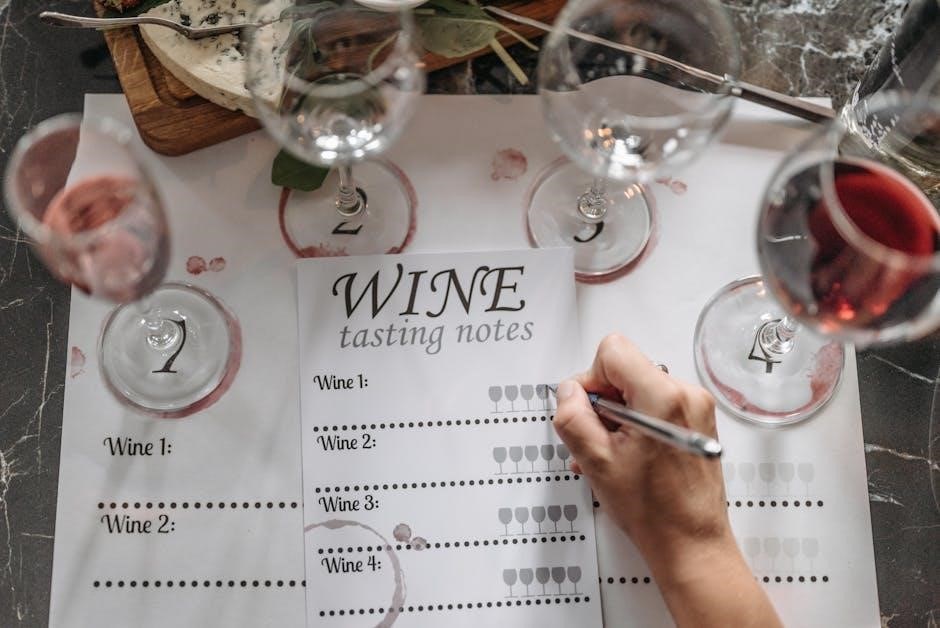
Consistent scoring‚ utilizing wine tasting score card PDF guides‚ is key; detailed notes alongside ratings improve recall and refine your palate over time.
Tips for Consistent Scoring
To maximize the benefits of using a wine tasting score card PDF‚ consistency is paramount. Begin by establishing a clear understanding of the scoring criteria outlined on the card – whether it’s a basic template or a more detailed sommelier version.
Taste wines in a controlled environment‚ free from distracting aromas. Always evaluate wines in the same order – typically from lighter-bodied to fuller-bodied‚ and dry before sweet. Take detailed notes alongside your numerical scores; descriptors like “bright cherry” or “subtle oak” provide valuable context for future reference.
Avoid letting prior biases influence your assessment. Focus solely on the wine in the glass‚ and be honest in your evaluation. Regularly revisit your past scores and notes to calibrate your palate and identify any scoring tendencies. Utilizing a standardized PDF scorecard ensures a uniform approach to each tasting.
Recording and Analyzing Your Scores
Effectively utilizing a wine tasting score card PDF extends beyond simply filling it out. Consistent recording of scores and accompanying notes creates a valuable personal wine database. Consider organizing your completed PDF scorecards digitally – spreadsheets or dedicated wine apps are excellent options.
Analyzing your scores over time reveals patterns in your preferences. Identify grape varietals‚ regions‚ or winemaking styles you consistently favor. This self-discovery enhances your wine knowledge and guides future purchasing decisions;
Look for correlations between scores and specific tasting notes. Do wines with high acidity consistently receive higher ratings from you? Tracking these relationships refines your palate and allows for more informed recommendations. A well-maintained record‚ built upon your PDF scorecards‚ is a sommelier’s best friend!
Beyond PDF: Digital Wine Tasting Apps
While wine tasting score card PDFs offer a traditional approach‚ numerous digital applications are revolutionizing the experience. These apps often mimic the structure of a PDF scorecard‚ providing fields for aroma‚ taste‚ and finish evaluation‚ but with added benefits.
Digital platforms allow for easy data storage‚ searchability‚ and sharing of tasting notes. Many apps include extensive wine databases‚ providing information on producers‚ regions‚ and vintages. Some even offer personalized recommendations based on your scoring history.
Furthermore‚ apps facilitate collaborative tasting experiences‚ enabling groups to share scores and notes in real-time. Though PDF versions remain useful‚ these apps offer enhanced convenience and analytical capabilities‚ elevating wine exploration to a new level of sophistication.